


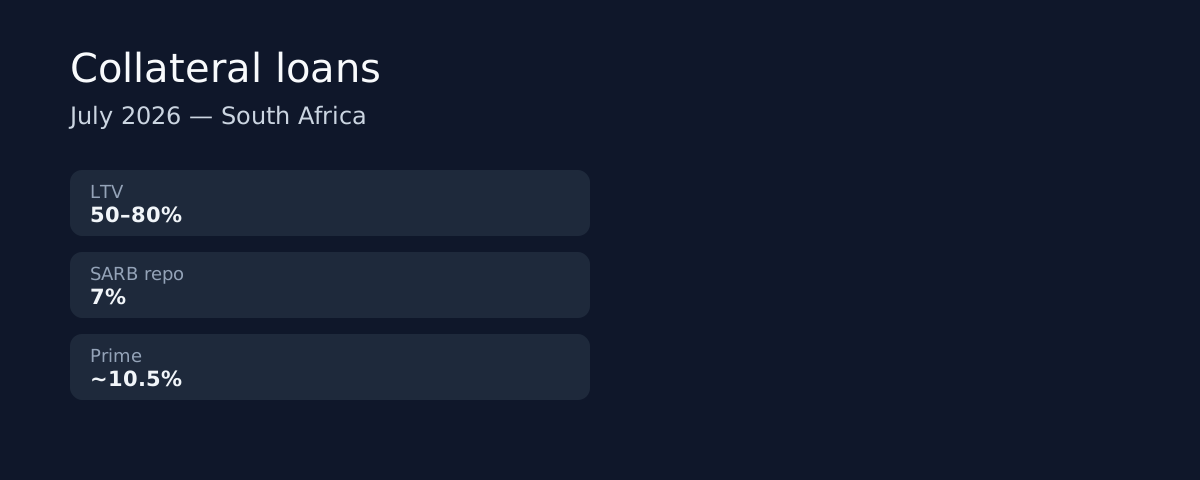
Collateral loans (secured lending) in South Africa let you pledge an asset — vehicle, property, savings or high-value goods — in exchange for a lower rate than unsecured credit. The lender holds security interest until the loan is repaid; default can trigger repossession and sale under NCA rules.
July 2026 macro anchor: SARB policy rate is 7% after the May 2026 MPC (+25 bps, effective 29 May). Prime lending sits near 10.5%; secured bank facilities often price at prime plus a narrow margin because collateral cuts lender loss-given-default.
Collateral loans — July 2026
Major banks Standard Bank, FNB, Absa and Nedbank offer vehicle- and property-backed personal facilities; non-bank providers (pawn/asset lenders) serve smaller tickets from R5,000 with faster appraisal. Loan-to-value typically 50–80% of appraised asset value — do not expect full market price as proceeds.
| Collateral | Typical LTV | July 2026 |
|---|---|---|
| Vehicle | 70–80% | Bank + asset lenders |
| Property | 50–70% | Standard Bank/FNB |
| Savings pledge | Up to 100% | Absa/Std Bank |
| SARB repo | 7% | May 2026 MPC |
Providers and mechanics
FNB securities-based lending and Standard Bank investment-backed facilities use listed shares or fixed deposits as pledge — approval tied to portfolio value, not only salary. Vehicle collateral routes through instalment sale or secured PL; registration documents must show clear title without undisclosed encumbrance.
All providers must be NCR-registered — verify on ncr.org.za before handing asset papers. NCA pre-agreement must disclose initiation fee (max 10%, cap R1,000), monthly service fee (cap R69) and total cost of credit.
Rates and affordability
Bank secured rates often start near prime ~10.5% plus 0–3% margin on strong files; asset-based non-bank lenders may quote higher for thin credit history. Stress-test repayment at +0.5% on offered rate — SARB held at 7% in May but July MPC due 23 July 2026 may shift curve.
Terms run 12–84 months on vehicles; pawn-style deals often 6–12 months. Budget insurance and storage costs where lender mandates comprehensive cover on financed assets.
Risks you must model
Primary risk is loss of pledged asset on sustained default — repossession legal costs add to outstanding balance. Avoid pledging essential transport without backup mobility plan. Do not stack secured loan on already-encumbered vehicle (double pledge fraud risk).
When secured fits — and when to skip
Secured suits borrowers with valuable paid-off asset and need R30,000–R500,000 at bank-rate margin. Skip if asset is sentimental or income cannot survive +0.5% rate shock — unsecured micro-ticket from NCR lender may be cheaper than losing family vehicle.
Updated overview - June 29, 2026
| Provider | Interest Rate (p.a.) | Loan Term | LTV Ratio | Notes |
|---|---|---|---|---|
| Standard Bank | From 11.0% | Up to 84 months | 70% | Vehicle/property finance |
| FNB | From 10.5% | Up to 60 months | 70-80% | Securities-based/vehicle loans |
| Absa | From 10.75% | Up to 72 months | 60-80% | Vehicles, property, savings |
| Nedbank | From 11.1% | Up to 72 months | 65-75% | Via personal loan products |
| Capitec | From 11.9% | Up to 60 months | 60-70% | Vehicle finance via partners |
As of June 29, 2026, the South African collateral loan market shows a general return to slightly lower, more competitive rates from major banks. The SARB repo rate remains constant at 8.0%, holding the prime lending rate at 11.5%. This consistent monetary policy provides a stable foundation for secured credit. Standard Bank's rates for secured loans are now starting from 11.0% p.a., indicating a competitive adjustment.
FNB continues to offer strong rates from 10.5% p.a., particularly for securities-based and vehicle loans. Absa's secured loan products are available from 10.75% p.a. Nedbank's secured personal loan offerings begin at 11.1% p.a. Capitec, through its partnerships, provides vehicle finance from 11.9% p.a. These figures suggest a minor easing in borrowing costs as lenders seek to attract more customers.
Loan terms remain flexible, typically ranging from 1 to 7 years. The loan-to-value (LTV) ratios generally fall between 60-80% of the asset's appraised value. The National Credit Act (NCA) and the National Credit Regulator (NCR) continue to enforce stringent regulations. This ensures fair play and transparency in the collateral loan sector, protecting borrowers' interests.
Comparison checklist (July 2026)
Before signing, compare three numbers across two lenders: LTV advance, monthly instalment at offered rate, total cost including initiation and credit life. If secured total exceeds unsecured bank quote by less than 5%, collateral may not be worth repossession risk.
| Check | Bank secured | Asset lender |
|---|---|---|
| LTV | 70–80% vehicle | 50–70% quick |
| Rate floor | Prime ~10.5% | Quote-based |
Keep valuation report and signed pre-agreement — dispute path through NCR or Credit Ombud with contract reference.
Expert analysis - June 29, 2026
The slight decrease in rates from some major banks towards the end of June indicates robust market competition. Despite the stable repo rate, banks are actively adjusting their pricing. This is to attract a larger share of the secured lending market. Borrowers should take advantage of this competitive environment. They can secure more favourable terms for their collateral loans. Always compare multiple offers carefully.
The stability of the SARB repo rate has provided a period of predictable borrowing costs. This is beneficial for both lenders and borrowers. However, future economic indicators could lead to changes. Borrowers with variable rate loans should budget for potential shifts. Fixed-rate options, if available, can provide greater certainty for long-term planning. This hedges against future rate hikes.
The sustained growth in collateral loan uptake highlights its vital role in the South African financial ecosystem. It offers a practical solution for individuals needing access to funds. This is especially true for those with valuable assets but limited unsecured credit options. Strict adherence to FICA and NCA requirements is essential. This ensures a smooth and legally compliant application process. Always verify your lender's NCR registration for peace of mind.