





The term "above lending" is not a formally recognised financial product in South Africa. Instead, it commonly describes overdraft facilities or similar credit arrangements. These allow individuals or businesses to access funds beyond their available account balance. This guide clarifies what "above lending" typically refers to within the South African financial landscape.
Overdrafts are essentially short-term credit lines linked to your cheque or transmission account. They provide a financial buffer for unexpected expenses or cash flow gaps. Interest is only charged on the portion of the overdraft limit that you actually use, making it a flexible borrowing option.
In South Africa, the provision of overdrafts falls under the strict regulation of the National Credit Act (NCA). The National Credit Regulator (NCR) oversees these facilities, ensuring fair lending practices. This regulatory framework protects consumers from reckless lending and predatory interest rates.
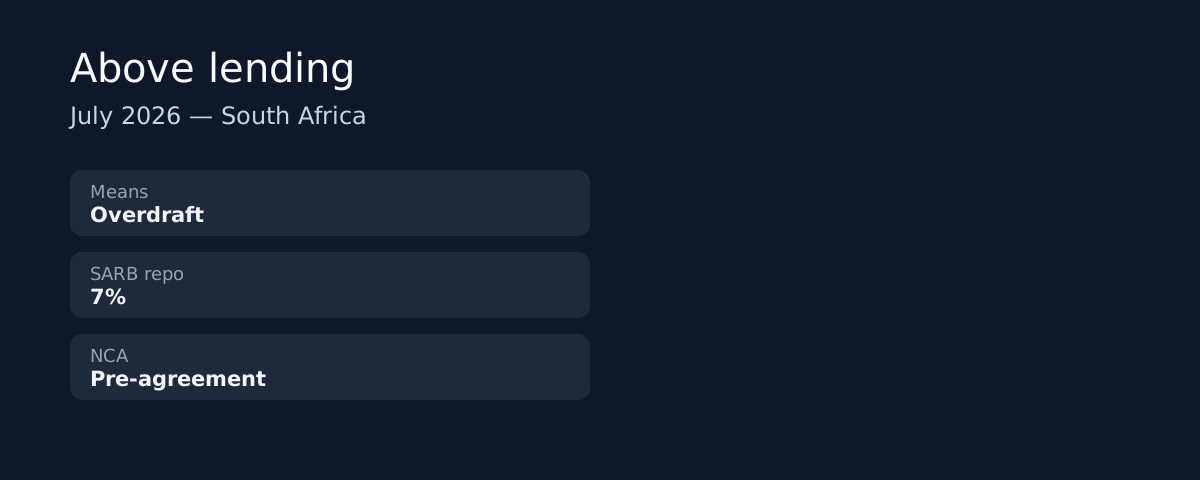
The cost of an overdraft is primarily driven by the prime lending rate, which tracks SARB repo plus a bank margin — check your bank’s current prime-linked rate in July 2026. This prime rate is directly influenced by the South African Reserve Bank (SARB) repo rate, which stood at around 7.00% after the May 2026 MPC (verify latest SARB statement). Banks add a margin to the prime rate, determining the final interest you pay.
Major South African banks are key providers of overdraft facilities. Standard Bank, FNB, Absa, Nedbank, and Capitec all offer various options tailored to different customer needs. These offerings range from small, accessible limits to substantial credit lines for established clients.
What is an Overdraft and How Does it Work?
An overdraft allows you to spend more money than you have in your account, up to a pre-approved limit. Think of it as a safety net for your everyday banking. When your account balance drops below zero, the overdraft facility kicks in to cover transactions.
Interest accrues daily on the negative balance. This means you only pay for the credit you use, for the duration you use it. For example, if you use R1,000 of a R5,000 overdraft for five days, you only pay interest on that R1,000 for those five days.
The interest rate is typically expressed as Prime plus a certain percentage. For instance, Prime + 3% means if Prime is 11.25%, your rate would be 14.25%. Banks also charge initiation fees and monthly service fees for maintaining the overdraft facility.
Repayment of an overdraft is flexible; as soon as funds are deposited into your account, they automatically reduce the outstanding overdraft balance. This revolving nature makes it convenient for managing short-term cash flow fluctuations. However, it requires discipline to avoid accumulating high interest charges.
The NCA mandates that banks conduct thorough affordability assessments before granting overdrafts. This ensures that borrowers can reasonably repay the debt. This crucial step prevents consumers from becoming over-indebted, aligning with the NCR's consumer protection mandate.
Overdraft vs PL — 17 July 2026
Above lending typically maps to authorised overdraft — interest on utilised balance only, not full limit.
Personal loan charges on full principal from day one — better for multi-month needs above R20k.
| Type | Interest base | Pick | Overdraft |
|---|---|---|---|
| Utilised | Revolving | Term PL | Full principal |
| Fixed | Need | <30 days | OD ok |
Confirm NCR registration and pre-agreement quote under the National Credit Act before signing — SARB policy moves reprice new facilities, not always fixed-rate blocks already booked.
Leading Overdraft Providers in South Africa
Several prominent banks offer overdraft services, each with distinct features and target markets. Understanding these differences can help you choose the most suitable option for your financial situation. Each bank structures its offerings slightly differently regarding limits, fees, and additional benefits.
Standard Bank provides both personal and business overdrafts, with limits customised to individual financial profiles. Their flexible approach allows for potential limit increases based on good repayment behaviour. This makes them a strong contender for those needing adaptable credit solutions.
FNB offers an eBucks overdraft on qualifying accounts, linking credit access to their popular rewards program. This can be attractive for customers who actively use FNB's banking services and wish to maximise their loyalty benefits. Their overdrafts often come with rewards-linked advantages.
Absa provides quick and easy access to cash through its overdraft options, including CashSend capabilities. This feature can be particularly useful for immediate liquidity needs. Absa focuses on providing instant access to funds for eligible clients.
Nedbank features a Greenbacks overdraft, aligning with its rewards program. They also stand out with an attractive introductory offer, sometimes including an interest-free period. This can be a significant benefit for new users looking to manage initial costs.
Capitec focuses on making credit accessible, offering limited overdrafts on their Access Account for eligible clients. Their approach often caters to a broader income spectrum, making essential credit facilities available to more South Africans. They are known for their simplified banking model.
Beyond these major players, other institutions like African Bank, Discovery Bank, and TymeBank also offer basic overdraft facilities. Specialist lenders such as DirectAxis provide personal over-limit solutions, which can function similarly to overdrafts. The market is diverse, offering many choices.
Eligibility and Application Process
To qualify for an overdraft in South Africa, applicants must meet specific criteria. These requirements are in place to ensure responsible lending and borrowing. Typically, you must be a South African citizen or permanent resident and at least 18 years old.
A minimum monthly income is usually required, ranging from R5,000 to R10,000. Self-employed individuals may need to demonstrate a higher income stability. Banks assess your income to ensure you can comfortably manage repayments, adhering to NCA guidelines.
Your credit score plays a critical role in the approval process. Lenders generally look for a credit score above 650. A good credit history, free from recent defaults or judgments, significantly improves your chances of approval. This reflects your past repayment behaviour.
FICA compliance is mandatory for all financial products in South Africa. You will need to provide a valid South African ID, proof of residence (not older than three months), and three to six months of bank statements. Payslips or tax returns (IRP5/IT3b) are also often required to verify income.
The NCA mandates an affordability assessment for all credit applications. This assessment ensures that your total debt repayments do not exceed a certain percentage of your income, typically around 30%. This prevents over-indebtedness and promotes financial stability for consumers.
The application process often begins with pre-qualification online or through a banking app. Many banks provide online calculators to estimate your potential limit. After pre-qualification, you submit the necessary documentation, usually via upload or at a branch.
A credit check is performed with credit bureaus like TransUnion or Experian. This allows the bank to review your credit history. Approval usually takes between 24 and 72 hours, after which your overdraft limit is set. You can then activate and monitor your overdraft through your banking app.
FICA verification is the final step, which may involve biometrics or a Smart ID scan. This confirms your identity. Understanding these steps helps streamline the application process and increases your chances of a successful application.
Rates, Fees, and Terms Comparison
Understanding the costs associated with overdrafts is crucial for making informed decisions. Rates, fees, and terms can vary significantly between providers. The interest rate is typically expressed as Prime + a percentage, ranging from Prime + 2% to Prime + 5%.
This translates to an effective annual percentage rate (APR) of approximately 13% to 16% in early 2026, assuming a prime rate of 11.25%. The specific rate you receive depends on your individual credit profile and the bank's assessment of your risk. Higher risk profiles generally attract higher rates.
Initiation fees are once-off charges applied when your overdraft facility is first set up or increased. These fees are capped by the NCA, currently at R165. Monthly service fees are also charged for maintaining the overdraft account, with a cap of R69 as of 2026.
The terms of overdrafts are generally revolving, meaning you can continuously use and repay the facility as needed. Some providers may offer specific repayment options over 12 to 60 months, particularly for larger overdrafts. However, the core function remains flexible, short-term credit.
| Provider | Interest Rate (est. 2026) | Initiation Fee | Monthly Fee | Min Term |
|---|---|---|---|---|
| Standard Bank | Prime +3% (~14.25%) | R100–R165 | R50–R100 | Open |
| FNB | Prime +2.5% (~13.75%) | R121 | R69 | Open |
| Absa | Prime +4% (~15.25%) | R100 | R60 | 12m |
| Nedbank | Prime +3.5% (~14.75%) | R165 | R50 | Open |
| Capitec | 18–25% (flat) | None | R0 | 1–6m |
Capitec's offering is notable for its flat interest rate, which can sometimes be higher than prime-linked rates, but it comes without initiation or monthly fees. This structure might appeal to those who prefer straightforward pricing. Their shorter minimum terms also differentiate them.
It is important to compare the total cost of credit, not just the interest rate. Consider the combined impact of initiation fees, monthly fees, and the interest rate. Tools like FinCheck.co.za can help you calculate and compare these total costs accurately.
Advantages, Risks, and Considerations
Overdrafts offer several benefits, particularly for managing short-term financial needs. They provide instant access to funds, acting as a crucial buffer for unexpected expenses. You only pay interest on the amount you use, making it cost-effective for brief borrowing periods.
Advantages
- Instant access to emergency funds.
- Interest charged only on the used amount.
- Can help build a positive credit history.
- Flexible repayment as funds enter account.
- Convenient for managing cash flow fluctuations.
Disadvantages
- High interest rates compared to other loans.
- Daily interest accrual can quickly add up.
- Risk of over-indebtedness if not managed properly.
- Monthly and initiation fees erode benefits.
- Can lead to reliance on credit for basic needs.
However, overdrafts come with significant risks. The interest rates are typically higher than those for secured loans. Because interest compounds daily, costs can quickly escalate if the overdraft is not repaid promptly. This can lead to a cycle of debt if not managed carefully.
Over-indebtedness is a serious concern with overdrafts. Statistics show that approximately 40% of South African debt reviews involve overdraft facilities. This highlights the potential for consumers to fall into financial distress if they rely too heavily on this form of credit.
To mitigate risks, financial experts advise keeping your overdraft usage below 50% of your approved limit. Consistently repaying the outstanding balance each month helps control costs. Monitoring the SARB repo rate is also important, as it directly influences the prime rate and thus your interest charges.
Consider your income stability before opting for an overdraft. If your income is highly variable, a fixed-term loan might be a safer option. This provides predictable repayments, unlike the revolving nature of an overdraft, which requires constant monitoring.
Regulations and Trends in Overdraft Lending
The South African financial sector for overdrafts is heavily regulated to protect consumers. The National Credit Regulator (NCR) and the Financial Sector Conduct Authority (FSCA) play crucial roles. All credit providers must be registered with the NCR, ensuring compliance with the NCA.
The NCA specifically bans reckless lending, meaning banks cannot grant credit if it would cause the consumer to become over-indebted. This principle underpins the affordability assessments. The SARB sets the repo rate, currently at 8.25% in early 2026, which directly impacts the prime lending rate (around 11.25%).
Current trends show a significant rise in digital overdraft applications and usage. Capitec, for example, reported a projected 20% uptake in digital overdrafts by 2025. This shift towards digital channels reflects increased convenience and accessibility for consumers.
Post-2024, the industry anticipates tighter affordability assessments. This move aims to further protect consumers and ensure sustainable lending practices. Regulators are continuously evaluating the credit landscape to adapt to economic conditions and consumer behaviour.
Despite inflationary pressures, the SARB has maintained a relatively steady prime rate. This indicates a focus on inflation control rather than stimulating economic growth through lower borrowing costs. Consumers should remain aware of these monetary policy decisions as they affect overdraft rates.
Expert Tips for Managing Overdrafts
Comparing the total cost of credit, not just the interest rate, is a vital step. Utilise online comparison tools like FinCheck.co.za to get a comprehensive view of different offerings. This helps you identify the most cost-effective option for your specific needs.
For self-employed individuals, providing six months of bank statements can strengthen your application. This demonstrates a consistent income flow, which banks prefer. Regular income proof is essential when assessing creditworthiness for self-employed applicants.
If you have a challenging credit history or have been blacklisted, traditional overdrafts might be difficult to obtain. Consider starting with rebuild loans from institutions like African Bank. These products are designed to help you re-establish a positive credit score over time.
Avoid overdrafts if your income is highly variable or unpredictable. A revolving credit facility requires consistent repayment to avoid escalating costs. In such cases, a fixed-term personal loan with predictable monthly instalments might be a more suitable and safer financial choice.
Common Overdraft Issues and Solutions
Experiencing a declined overdraft application can be frustrating. Often, this is due to a low credit score or a high debt-to-income ratio. To fix this, focus on improving your credit score by paying all bills, including utilities, on time. Reduce your existing debt to lower your debt ratio.
If over-indebtedness is a concern, consider debt counselling. The NCR offers resources and guidance for consumers struggling with debt. Debt counsellors can help negotiate with creditors and structure a manageable repayment plan, protecting you from legal action.
High fees can quickly erode the benefits of an overdraft. If you find your fees excessive, try negotiating with your bank for a lower rate or a fee waiver. Alternatively, explore switching banks to one that offers more competitive fees for overdraft facilities.
Falling into an "overlimit trap" occurs when you exceed your approved overdraft limit. This can incur additional charges and impact your credit score. Set up app alerts to notify you when your balance is low or approaching your limit. Consider setting up automatic repayments to avoid going over.
Beware of credit scams. Always verify the NCR registration number of any credit provider on the NCR's official website. Legitimate lenders will not pressure you for upfront payments or personal details via unsolicited SMS or email. Report suspicious activity immediately.
Above lending — July 2026
July 2026 clarification: "above lending" is not a formal NCR product name — it usually means overdraft or similar revolving credit on a cheque/transmission account. Standard Bank, FNB, Absa, Nedbank and Capitec offer overdraft limits from a few thousand rand to R250,000+ on qualifying profiles; interest accrues only on the drawn portion.
SARB policy rate is 7% (May 2026 MPC); prime near 10.5% sets the overdraft pricing floor before bank margin. NCA affordability assessment and NCR registration apply — pre-agreement must disclose monthly service fee and interest on utilised balance.
| Facility | Interest on | July 2026 |
|---|---|---|
| Overdraft | Drawn balance | Revolving |
| Term loan | Full principal | Not "above" |
| SARB repo | 7% | May 2026 |
| NCA | Affordability | Mandatory quote |
Use overdraft for short cash-flow gaps under 30 days — rolling salary shortfalls month-on-month is cheaper on a formal personal loan with fixed term.
Update July 2026: rates, NCR and product fit
ADD-41-ZA-20260724“Above lending” on this page is an English search phrase for using a bank facility above your available balance — almost always an overdraft or similar revolving credit under South Africa’s National Credit Act (NCA). It is not the US fintech brand “Above Lending, Inc.” (Chicago). No reliable public NCR registration for a local consumer brand by that trade name was found in July 2026 research; treat any cold-call “Above Lending SA” offer as unverified until you match NCRCP details on ncr.org.za.
| Topic (July 2026) | Operational fact |
|---|---|
| Policy rates | SARB repo widely reported at 7.00% after the 28 May 2026 MPC (earlier held near 6.75%); prime lending often at 10.50% — re-check SARB and your bank’s pricing sheet |
| NCA cost caps (illustrative max) | Unsecured personal loans: repo + 21% p.a. band (about 28% when repo is 7%); credit cards often discussed with a lower statutory max band (~21% p.a.); short-term credit ≤R8k / ≤6 months can price up to 5% per month — still only if the lender is registered |
| Overdraft cost shape | Interest on daily utilised balance + facility/service fees; not “free float” |
| Mandatory process | Affordability assessment (s81) + written pre-agreement quote before you accept |
| Register check | Search ncr.org.za Register of Registrants by name or NCRCP number; match legal name and contacts exactly |
Product fit. Use an overdraft for gaps under a few weeks. For multi-month shortfalls, a fixed personal loan or carefully managed card with a clear payoff plan is usually cheaper than rolling the same overdraft all year. Salary advances and payment extensions beat any credit product when available.
Internal links. Compare other ZA credit pages on this site: Boodle loans, credit limit. Always confirm total cost of credit in rand on the quote, not the marketing headline.
moneyza.co.za operational update July 2026. Not a credit offer. SARB/NCR rules and bank tariffs control.